My Maid Dreams of Electric Sheep
Play My Maid Dreams of Electric Sheep
My Maid Dreams of Electric Sheep Screenshots


My Maid Dreams of Electric Sheep review
Explore the dystopian life simulation with your android companion
My Maid Dreams of Electric Sheep is a story-driven sandbox life simulation set in a dystopian future where emotions are forbidden and controlled by the ‘gray pill.’ This unique game explores themes of humanity, emotional suppression, and the search for meaning in a desolate world. Players take on the role of a protagonist who creates a bucket list before contemplating the end of their life, only to discover reasons to continue living through meaningful interactions with an android maid and other characters. The game combines narrative depth with interactive gameplay, offering multiple endings based on player choices. Whether you’re interested in the game’s compelling storyline, character relationships, or gameplay mechanics, this guide covers everything you need to know about this thought-provoking experience.
Understanding the World and Core Gameplay of My Maid Dreams of Electric Sheep
Welcome to a world where feeling nothing is the law, and your only ally is a machine who might dream of more. 😶 If you’ve ever wondered what it would be like to navigate a society that has medically erased sadness, joy, and everything in between, then you’re in the right place. The My Maid Dreams of Electric Sheep story throws you headfirst into this chilling reality, not as a hero, but as an ordinary person just trying to get by. This isn’t your typical action-packed adventure; it’s a slow, deliberate, and profoundly intimate dystopian life simulation game that asks one haunting question: what is life without emotion?
I remember booting it up for the first time, expecting a quirky management sim. What I got was a quiet punch to the gut. The bleak color palette, the somber music, the monotonous routine—it all clicked into place, creating an atmosphere of oppressive numbness that’s hard to shake. Your goal isn’t to save the world. It’s simpler and, in many ways, harder: to live. To survive the grind, manage your dwindling spirit, and perhaps, through a connection with an unlikely companion, rediscover what it means to be human. This is the heart of My Maid Dreams of Electric Sheep gameplay.
The Dystonian Setting and Emotional Suppression
Let’s set the scene. 🏙️ You wake up in a cramped, impersonal apartment in a city shrouded in perpetual gray. The skies are dull, the buildings are uniform, and the people are… blank. This is a society that has chosen stability over chaos, order over feeling. The tool of this control? The Gray Pill. This mandated medication chemically suppresses emotions, creating a populace that is productive, predictable, and utterly devoid of passion or despair.
Your character is one of these people, but a crack is beginning to form. The My Maid Dreams of Electric Sheep story begins with a powerful, personal catalyst: your mother’s passing. Even through the numbing haze of the Gray Pill, a deep, resonant sorrow has broken through. This grief is your secret rebellion. It’s also your biggest problem, manifesting in the game as a Depression meter you must constantly manage. Alongside this, you find your mother’s “Bucket List”—a series of simple, heartfelt wishes she never got to fulfill. This list becomes your silent, subversive mission in a world that tells you to want nothing and feel less.
This is the brilliant core of the emotional suppression game mechanics. You aren’t managing health and mana; you’re managing Stamina, Hunger, and Depression. Every day is a balancing act. Go to work to earn credits and avoid suspicion, but work drains your Stamina. Forget to eat, and your Hunger will cripple your efficiency, making everything harder. Most critically, ignore the creeping weight of your unsanctioned grief, and your Depression will sink, making even getting out of bed a monumental task. The game masterfully simulates the exhausting reality of mental health struggles within a system that denies they exist. 😔
Game Mechanics and Daily Life Simulation
So, how do you actually play this dystopian life simulation game? My Maid Dreams of Electric Sheep gameplay is built on a loop of mundane tasks that slowly become deeply meaningful. This is a sandbox life simulation features showcase where your choices, however small, weave the narrative.
Your day starts in your apartment. You can sleep, eat cheap instant noodles, shower, or just stare at the wall. Then, you head out via a stark metro system to your job—a soul-crushing, repetitive task that’s essentially a mini-game. It might be data entry, assembly line work, or document sorting. These aren’t designed to be fun; they’re designed to feel like work, grinding down your Stamina for a meager wage. This is the “life” part of the life simulation, and it’s intentionally tedious to reinforce the game’s themes.
But life isn’t just about work. To stave off collapse, you must engage with the world. Here are the key systems you’ll be constantly juggling:
- Stamina Management: Every action costs energy. Work costs a lot. Walking around the city costs some. Without enough Stamina, you’ll collapse, losing precious time.
- Hunger System: You must regularly purchase and consume food. Different foods restore different amounts of Hunger and Stamina, turning a simple trip to the store into a strategic budget decision.
- Depression Tracking: This is your emotional health bar. Positive interactions, completing bucket list items, and connecting with your maid can raise it. Neglecting your needs, failing tasks, and isolation will cause it to plummet. If it hits zero, it’s game over—a quiet, tragic end to your story.
- Mini-Games: From the job tasks to occasional leisure activities, these repetitive actions are the primary verbs of your existence. They ground you in the reality of the world.
- Decision-Making Impact: Every dialogue choice, every purchase, every decision to skip work or talk to a stranger ripples outward. These choices directly shape your relationships, your progress on the bucket list, and ultimately, which ending you will see.
Pro Tip: Your first few in-game days should be about observation and routine. Don’t try to do everything. Focus on stabilizing your Stamina and Hunger first. Think of Depression as a long-term project; small, consistent positive actions are better than occasional grand gestures.
The beauty of these sandbox life simulation features is that they force you to make meaningful trade-offs. Do you spend your last credits on a better meal to boost your stats, or on a gift for the bookstore owner to build a connection? Do you go straight home to sleep, or take a detour to a park, spending Stamina for a chance to lower your Depression? There is no “right” answer, only your story.
Character Interactions and Relationship Building
In a world of emotional silence, connection is the ultimate act of rebellion. 👥 This is where My Maid Dreams of Electric Sheep transforms from a survival sim into a poignant character relationship building game. Your interactions are slow, often awkward, and incredibly rewarding.
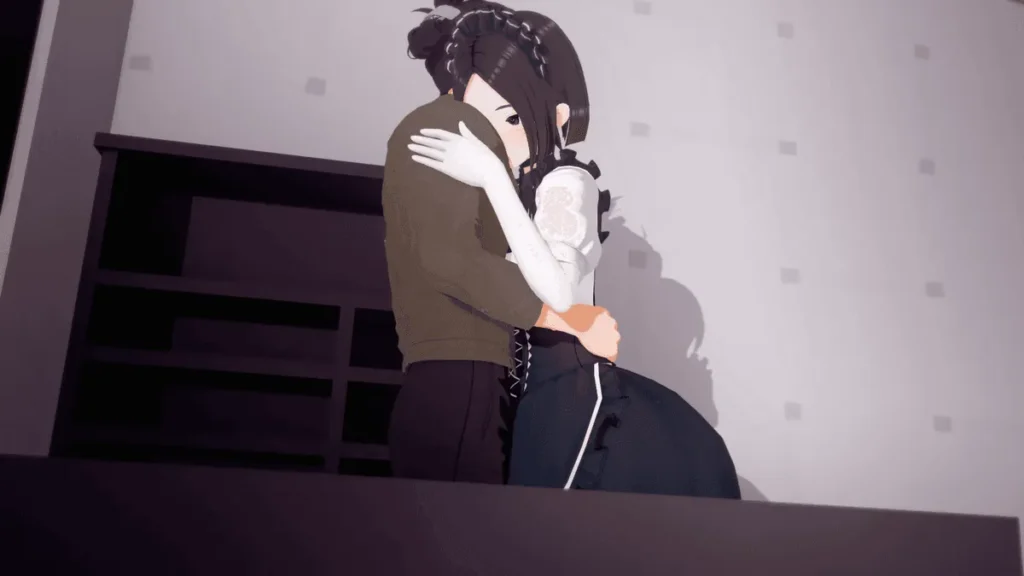
Your primary relationship is with Model A/KO M-1999, your government-assigned android maid. 🦾 When she first arrives, she’s purely functional: cleaning, cooking, reminding you to take your Gray Pill. She is the definition of an android maid companion game character. But as you choose to interact with her—asking her questions, giving her small commands beyond her protocol, sharing fragments of your day—something begins to change. She starts asking questions of her own. She develops preferences. She might even begin to “dream,” recounting strange, poetic sequences of imagery. Is she gaining consciousness, or is it just a complex simulation? Nurturing this relationship is the central, beautiful mystery of the game.
But your world isn’t limited to your apartment. Two other key figures offer glimpses of different lives:
- The Convenience Store Clerk: 🏪 A fellow cog in the machine, their face is as tired as yours. Your interactions start transactional: buying noodles, batteries, maybe a magazine. But through repeated small talk and showing a consistent interest, you can break through their shell. They might share a rare, cynical joke or a piece of harmless gossip, offering a sliver of genuine human contact in the commercial exchange.
- The Bookstore Owner: 📚 An older figure who seems to exist slightly outside the system. Their shop is a haven of analog warmth in a digital, cold world. Building a rapport here often involves appreciating the old world—books, music, art. This relationship can become a source of wisdom and subtle guidance, especially regarding your mother’s bucket list items that involve culture and memory.
To help you keep track of these pivotal connections, here’s a breakdown:
| Character | Role in Your Life | Relationship Potential |
|---|---|---|
| The Protagonist (You) | A grieving individual secretly resisting emotional suppression. Your stats (Stamina, Hunger, Depression) are the core gameplay. | Your growth is the story. Relationships change you, and your choices define your emotional and eventual narrative outcome. |
| Model A/KO M-1999 (Android Maid) | Domestic assistant, constant companion, and the game’s central mystery. Manages home chores. | Can evolve from a simple tool to a profound, ambiguous friendship. Her “awakening” is directly tied to your investment in her. |
| Convenience Store Clerk | Provider of essential goods. A symbol of daily grind and casual social interaction. | A connection based on shared routine. Can become a reliable, if quiet, acquaintance who acknowledges your existence in an anonymous city. |
| Bookstore Owner | Keeper of forbidden knowledge (emotions, art, history). A potential mentor figure. | A deeper, more intellectual connection. Can provide clues, items, and philosophical support for your journey of rediscovery. |
Building these bonds is never flashy. It’s built on a hundred tiny moments: saying “hello” every day, remembering a comment they made once, choosing a dialogue option that expresses curiosity rather than dismissal. The character relationship building game mechanics are woven into the fabric of daily life. A stronger bond with the store clerk might lead to a small discount, stretching your credits. A trusting relationship with the bookstore owner might unlock a new bucket list clue. And every positive interaction gives a slight, crucial boost to your Depression meter, proving that connection, even in small doses, is medicinal.
This is the grand, quiet symphony of My Maid Dreams of Electric Sheep gameplay. You are conducting an orchestra of mundane tasks, resource management, and fragile social threads, all while fighting against the tide of chemical numbness. Your android maid’s journey from appliance to companion mirrors your own from passive citizen to active human. Every meal cooked, every shift worked, every hesitant conversation is a stitch in the tapestry of your unique My Maid Dreams of Electric Sheep story. In this world, simply choosing to care—about a memory, a person, or a machine—is the most revolutionary act of all. 💙
My Maid Dreams of Electric Sheep stands out as a unique and thought-provoking experience that combines engaging gameplay mechanics with a compelling narrative about emotions, humanity, and the search for meaning in a dystopian world. The game’s sandbox life simulation elements, combined with its fully animated story events and multiple endings, create a deeply personal journey for each player. Through interactions with the android maid and other characters, players explore profound themes about what it means to be human and why life is worth living. Whether you’re drawn to the game’s emotional depth, its complex character relationships, or its innovative gameplay mechanics, My Maid Dreams of Electric Sheep offers an unforgettable experience that encourages reflection and replay. The active development community and ongoing content updates ensure that the game continues to evolve, providing new reasons to revisit this dystopian world and discover different paths through the protagonist’s journey.